

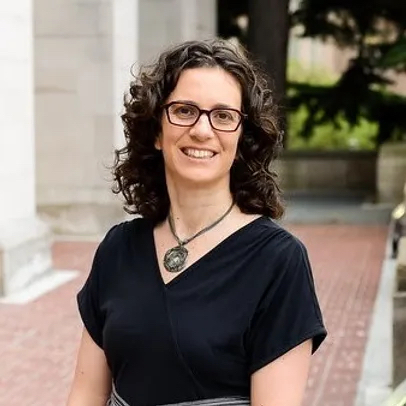
Cheryl Kaiser
Research
Cheryl Kaiser’s research explores psychological aspects of prejudice, stereotypes, group identities, and diversity, and the intersection of these topics with law, politics, and policy. Current projects explore how well-intentioned organizational diversity initiatives create unintended consequences, including the perpetuation of discrimination, minority stress, reactance among majority groups, and the miscarriage of civil rights laws. She also explores how prototypes of women obscure perceptions of sexual harassment, to the detriment of victims of harassment, organizations, and civil rights laws. She is also exploring how to reduce political polarization to increase the civic health of society. Cheryl’s research been supported by the National Institute of Mental Health, the National Science Foundation, the Russell Sage Foundation, and the John Templeton Foundation.
You can learn more about our current research interests here: https://uwsilab.wixsite.com/home/publications
-----------------------------------------------------
Dear prospective graduate students,
I am honored that you are interested in joining our department and lab. I refrain from having email conversations, calls, and in-person meetings with prospective students prior to reviewing and evaluating all applications. I do this to avoid giving an unfair advantage to those who receive advice to reach out, or those who have connections to close colleagues, access to professional meetings, and other advantages. Additionally, this protects my time so I can focus my energy on current students and my job.
After the social/personality group discusses graduate applicants, I reach out and have thoughtful, structured interviews with students on the short list (applicants receive the interview questions prior to the conversation). I use those conversations to identify finalists for full interviews. There is plenty of time for deep conversations about fit and related concerns during the interviews.
Education
- September 17, 2025 Cheryl Kaiser Appears in Bibliography for Paper on Affective Polarization Published in Social Psychological and Personality Science
- October 3, 2024 Cheryl Kaiser is quoted in this Seattle Times article, titled How the “God gap” is shaping WA votes in the presidential election.
- July 24, 2024 Cheryl Kaiser received an award from the Templeton Foundation for research on the relationship between religious life and affective polarization
- February 27, 2023 Cheryl Kaiser Appointed Professor in Center for an Informed Public
- July 28, 2021 Cheryl Kaiser has been elected to the Washington State Academy of Sciences for 2021.
- May 27, 2021 Cheryl Kaiser is among researchers who received the 2020 Award for Best Article with a Preregistration in Journal of Experimental Political Science from the American Political Science Association's Experimental Research Section
- January 20, 2021 Cheryl Kaiser and co-author Bryn Bandt-Law’s study, on perceptions about sexual harassment of prototypical vs. non-prototypical women, is explored in this UW NEWS article
- August 17, 2020 Cheryl Kaiser is quoted in this Seattle Times article about what constitutes “Essential” travel
- April 1, 2020 Congratulations to Adam Smiley, a student in Cheryl Kaiser’s lab, who just received a NSF Graduate Research Fellowship
- August 16, 2019 Congratulations to Cheryl Kaiser, who just received a 3-year award from the National Science Foundation.
- September 26, 2018 Cheryl Kaiser’s research is referenced in this article from The Conversation about minorities with strong racial identities getting less pay or chances of being hired
- June 13, 2018 Congratulations to Arianne Eason (PhD, Psychology, 2018), who is featured in this Art & Sciences Perspectives Newsletter article.
- May 8, 2018 Cheryl Kaiser and Tony Greenwald are interviewed in this Crosscut article that questions the efficacy of Starbuck’s new racial bias training plan.
- February 5, 2018 Cheryl Kaiser’s research cited in this Five Thirty Eight article discussing the perceived levels of discrimination among Latinos across the United States.
- January 12, 2018 Clara Wilkins discusses the research she and Cheryl Kaiser conducted on the perception of bias against whites in this The Conversation article.
- July 19, 2017 The Department of Psychology welcomes professor Cheryl Kaiser as Chair!
- July 13, 2017 Cheryl Kaiser shares why she thinks millennials are great in a Seattle Times story.
- May 31, 2017 Cheryl Kaiser talks to Bill Radke of KUOW about the bystander effect, discussing the psychological phenomenon of whether or not to help someone in need if you are in a group.
- May 3, 2017 Cheryl Kaiser just agreed to serve as Chair for the Psychology Department for the next five years, beginning July 1, 2017. Congratulations Cheryl!
- January 19, 2017 Kristina Olson and Cheryl Kaiser were both recognized as Fellows of the Association for Psychological Science.
- January 4, 2017 Dr. Ines Jurcevic, an undergraduate honors student alumni from Cheryl Kaiser’s Social Identity Lab (UW Psychology Class of 2010), will be joining the UW Evans School of Public Affairs as an Assistant Professor in fall of 2017.
- January 4, 2017 Alex Preston, an undergraduate honors student, working in Cheryl Kaiser's Social identity lab, has been awarded a Mary Gates Research Scholarship.
- January 11, 2016 Cheryl Kaiser co-wrote a piece for the Harvard Business Review about the struggle to create effective diversity practices in the workplace. She notes that the editor provided the inflammatory title.
- February 11, 2015 Cheryl Kaiser received the 2014 Gordon Allport Prize from the Society for the Psychological Study of Social Issues for the best paper of the year addressing intergroup relations.
- April 16, 2014 Cheryl Kaiser was elected to Fellow status in the Society for the Psychological Study of Social Issues.
- January 8, 2014 Cheryl Kaiser has begun a two-year term as Associate Editor at Journal of Personality and Social Psychology (JPSP).
- August 21, 2013 Cheryl Kaiser was elected as a fellow of the Society for Personality and Social Psychology.
- April 10, 2013 Cheryl Kaiser was interviewed about her study regarding diversity training programs in work environments in the UW Today.
- April 16, 2012 Cheryl Kaiser’s receiving a James McKeen Cattell Sabbatical Award was included in the recent Arts & Sciences Perspectives.
- February 27, 2012 Cheryl Kaiser is a recipient of the 2012-2013 James McKeen Cattell Sabbatical Award.
- January 5, 2010 Ione Fine, Cheryl Kaiser, Scott Murray, and Joe Sisneros were approved by the College Council for promotion with tenure.
- April 13, 2009 Oliver Siy and Kerry Spalding received NSF Fellowships.
- April 13, 2009 Geoffrey Boynton, Eliot Brenowtiz, Cheryl Kaiser, Jeansok Kim, Alan Marlatt, Scott Murray, and the Clinical Psychology Program all received mention in the Awards and Honors section of the recent on-line version of A&S Perspectives magazine.
- March 2, 2009 Cheryl Kasier’s research "All prejudice isn't created equal; whites distribute it unequally to minorities," is discussed in University Week.
- January 20, 2009 Last issue we congratulated Cheryl Kaiser on her selection as the recipient of the 2009 SAGE Young Scholars Award.
- September 30, 2008 Cheryl Kaiser, with colleagues in Syracuse and Michigan State, researched black and white Americans’ responses to videos that blamed delayed Katrina response efforts on either government incompetence or on the majority of the victims were black.
- Publications can be found here:http://depts.washington.edu/silab/publications.html