

Serah Prakkat knew she wanted to major in psychology, but she wasn’t sure where her BS in Psychology would take her after she graduated from the University of Washington.
“My college essay was about taking care of my grandmother and learning more about different psychological aspects through that personal story,” Prakkat said. “But I definitely knew I didn’t want to work in the clinical side of things.”
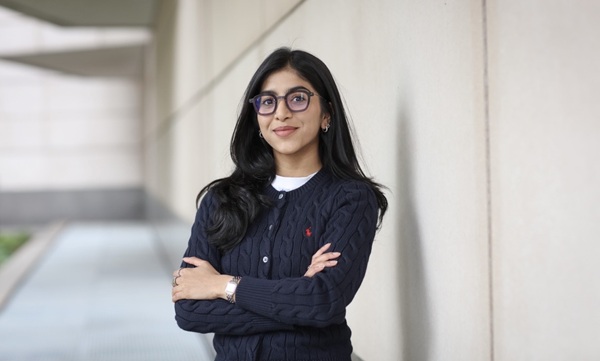
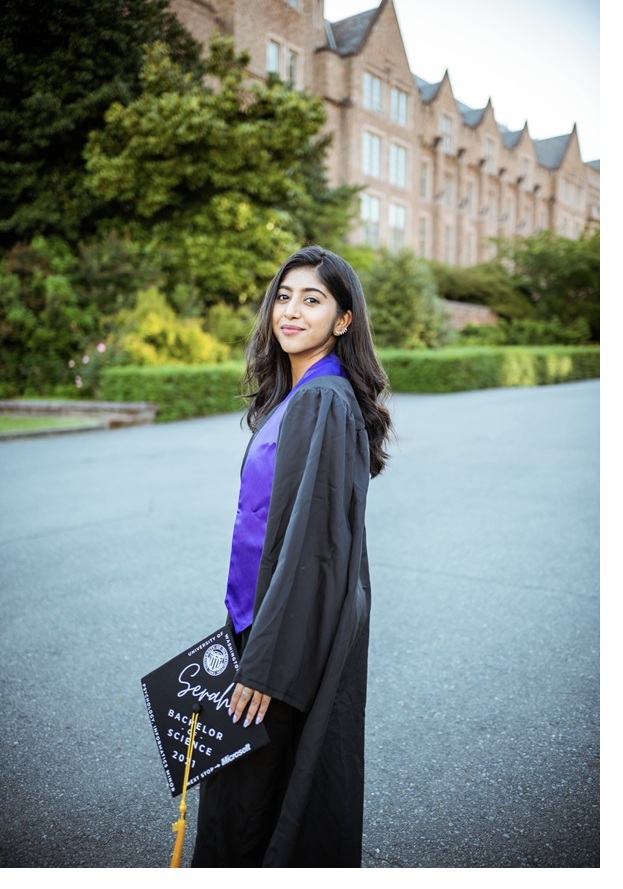
Prakkat, who started at UW in 2017 and graduated in 2021, was born in Kerala, India, and grew up in Dubai, UAE. In addition to majoring in Psychology, she minored in Informatics. She had an inkling that she wanted to go into tech, and an internship at Microsoft helped cement that desire. “I did not imagine that I would be able to break into a place like that,” she said. “I came from a background where I was not really exposed to tech—my father is in business and my mother is in social science—so I never explored it until I came to UW as an international student.”
After graduating from UW, Prakkat began working at Microsoft fulltime, and will have been there almost five years this August. She works as an Enterprise Account Manager in financial services, focusing on the intersection of sales and customer strategy to support enterprise customers using Microsoft technologies.
“A big part of my role has just been helping organizations and stakeholders work through these complex challenges they face by bringing in the right people to bring clarity in those ambiguous situations,” she said. “A lot of it is customer relationship management and understanding what they need. I think my psychology degree has helped me better understand people and what they want.”
Prakkat said she thinks her psychology degree plays an important role in her tech job as the rise of generative AI and Large Language Model (LLM) chatbots risks eclipsing human ethics.
“I think the human aspect is more important now than ever,” she said. “As human beings, we’re able to train these LLM models to get better on a day-to-day basis, and I think there’s a lot of aspects when it comes to both AI and technology in general where we’re able to use our power as human beings and our psychological aspects to train these models.”
Prakkat said majoring in psychology also gives her insight into ethical questions around AI, such as those involving bias. For example, if one were to feed a photo of a group of men and women into an AI model and ask it to put them in a different environment, its tendency is to change the faces of the women in the photo, but not of the men. “There’s a lot of training around biases that I think still needs to be done and improved,” she said.
Prakkat recognized that her experience breaking into tech does not mirror the experiences of many women who struggle to get their start in the traditionally male-dominated industry, and she was passionate about helping other early-career women follow a path similar to hers. She started a community organization called Career Womin—intentionally spelled to target anyone who felt like a minority, including first-generation students, international students, and women of color underrepresented in certain fields—designed to help women early in their careers feel more confident landing their first internship or job, and to build a sense of community and mentorship.
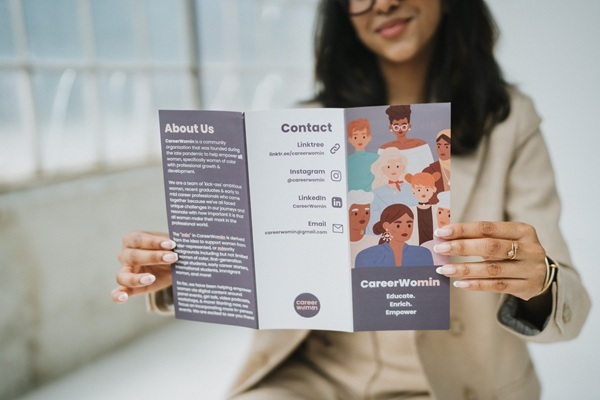
"We would go onto the UW campus, collaborate with student clubs, and do things like resume reviews," she said. The organization built a presence in the Seattle area, from social gatherings at local coffee shops to free coding classes at the local library. Since Prakkat's move from Seattle, Career Womin has paused some of its work, though she hopes to continue creating impact through other efforts.
"That was a really cool experience for me, meeting a lot of other girls, both within UW and outside, who were trying to do amazing things with their careers," she said.
Prakkat has since moved to Chicago, and started a part-time MBA program this January at the University of Chicago Booth School of Business. “That’s been an exciting journey as well. I’m taking evening classes in person and exploring areas like strategy, marketing, and entrepreneurship as I think about what’s next for me,” she said.
Most of Prakkat’s peers in business school come from an accounting or business background, with a smattering of engineering students. “I’ve rarely met folks who are from a social science-oriented background,” she said. “I definitely think you can add a different perspective when it comes to class discussions and groups and things like that, so I think it’s extremely valuable. And all of these business schools I think understand that as well, which is why they value those different perspectives coming from people with different backgrounds. So you definitely feel like you’re there for a reason.”
Prakkat suggests that anyone trying to break into tech or another field take advantage of as many opportunities as possible to network, make connections and build experiences to add to one’s resume.
"I think when you're trying to break into fields that don't exactly match your background, you have to really build those experiences," she said.
Her efforts to do just that culminated in her getting a foot in the door at Microsoft after a recruiter came across her LinkedIn profile and suggested she would be a good fit for the role. The fact that she came from a psychology background and caught a recruiter’s eye, rather than the other way around, indicates that psychology majors can be attractive prospects for tech companies and other desirable employers, she said.
“I think people underestimate how powerful a psychology major can be,” she said. “It just depends on how you customize it and what you do to stand out.”