

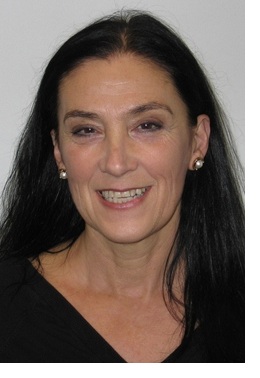
Dr. Ellen Covey retired from the University of Washington after 30 years at the university, where she was an affiliate of the Bloedel Hearing Research Center. Dr. Covey researched the mammalian central nervous system, particularly focusing ont he auditory process of bats and echolocation. Outside of UW, Dr. Covey is an award-winning perfumer, even having a released a perfume inspired by her work with bats, Night Flyer.
As she heads into retirement, we asked Dr. Covey to reflect on her career at UW, share insights from her research, and offer advice for the next generation of psychology researchers.
 What first drew you to neuroscience and the study of hearing?
I have never been one of those people who has always dreamed of doing or being this or that and pursued a single goal relentlessly. I am more of an opportunist, who sees a path and takes it to discover where it goes. What most people don’t know is that for the first two years of my undergrad time I was an art student in Rome, specializing in stage design. It’s possible that the practice of having to make highly realistic and detailed drawings came in handy much later when I was making neuroanatomical drawings. I’ll skip a lot of autobiography here. After coming to the US and starting undergrad education in a whole new system, I was encouraged by various parties to pursue a pre-med major, which was fine with me because I was interested in biology as a whole. In my senior year, I did a senior honors thesis, which gives me a soft spot in my heart for my own students who have done honors theses. Back in the 1970s, we did not choose a lab, we ranked a few topics we would like to study and were assigned a lab. I was fascinated by biochemistry, so that was my first choice. It must have been popular, because I was assigned my second choice, neurobiology. I stayed in that lab, studying circadian rhythms and catecholamines through my master’s thesis. A family move took me to North Carolina. At Duke University I did my doctoral research in a lab that studied the neurophysiology of the gustatory (taste) system. More about that later. For my postdoc, I worked on the physiology of visual cortex. Then I returned to Duke to help set up an electrophysiology rig in a lab that studied the anatomy of the auditory system. Instead of going on to other things, I stayed there as a research faculty member for 15 years, so that’s how I ended up in the study of hearing.
What role did the University of Washington and the Department of Psychology play in shaping the direction of your research over the years?
My appointment at Duke was in the Medical School, so, as is usually the case with medical schools, I had to bring in all of the money for my research, plus 100% of my salary, on grants. I really loved most of my colleagues at Duke, but this was a precarious way to live, so I finally decided to try to improve the situation. At the University of Washington Psychology Department I had what seemed like the unbelievable luxury of a 9-month salary, which freed up enough grant money to hire an outstanding lab manager, Kim Miller. Over the years, she not only took care of many administrative tasks, but became a valued scientific collaborator. I also had the luxury of a sabbatical, which I spent as a visiting professor in Spain, pursuing a line of research that my UW students and postdocs found frustrating. Stimulus-specific adaptation, or novelty detection, has since become a mainstream concept. One trade-off was that I spent more time teaching, which for most of my career I have enjoyed. Now, in retirement, I can come full circle to focusing on whatever research I want to do, but without any pressure to constantly publish or perish.
Much of your career centered around studying echolocation in bats. Why bats, and what is it about echolocation that convinced you it was the right system for studying complex auditory processing?
A year or two into my time at Duke, a graduate student removed a colony of big brown bats from a neighbor’s attic and brought them in to the lab. I was immediately fascinated by them and reasoned that they must have neural specializations for echolocation. The answer turned out to be “yes and no”. The brain of a bat has all of the same structures as the brain of any other mammal, no add-ons, but the auditory system makes up an enormous percentage of the bat’s brain, and parts of it, especially some cell groups in the brainstem, are much more highly differentiated than in other species. Examining the function of these brainstem cells, we found that they are specialized to provide exquisitely precise timing markers for the onset of sounds or sound components independent of loudness or other sound features. This makes sense given that bats must measure the time between their vocalizations and faint returning echoes to determine the distance of objects. Bats have also been valuable for studying the function of the midbrain, providing information about how multiple subthreshold inputs with different properties are integrated to detect specific features of sound, and how auditory information is related to the motor and limbic systems.
What principles discovered in bats do you think have had the broadest relevance to neuroscience more generally?
One of the most fundamental questions about the operation of the nervous system is how each one of the billions of neurons in the brain “makes decisions” (i.e., whether or not to fire an action potential and transmit information on to other neurons) based on a complex subthreshold interplay of excitatory, inhibitory, and modulatory inputs, the intrinsic properties of the neuron, its history-dependent state, and other factors. The types of models that we have created for auditory feature detection in the bat midbrain are relevant to all brain activity regardless of species and system. Because the same principles apply so broadly, they are also useful for engineering applications such as speech recognition, visual pattern recognition, noise cancellation, and robotics.
Looking back, what were the most important questions you were trying to answer when you began your career?
Since the very beginning of my career, I have been interested in how the time element is embedded in neural processing. Starting with studies of how cycles in neurotransmitter release are related to daily cycles, I went on to show how the distribution of action potentials over time encodes information about taste quality. These studies informed my subsequent studies of supra- and subthreshold studies of how multiple diverse inputs offset in time combine to produce a neuron’s selective responses to features of sounds. All of these approaches to the study of time-distributed information provide insight to the larger question of how the brain functions in real time.
What developments in neuroscience have excited you the most? What developments concern you?
Probably some of the most exciting developments in neuroscience are technological. For example, optogenetics has provided a new way to study questions that I was interested in earlier in my career but was unable to investigate easily. I am ambivalent about the use of AI to study large data sets. On the one hand it could be very useful in elucidating complex pattens of neural connectivity and correlating activity across multiple sets of neurons, performing tasks that would be incredibly tedious for a human. However, it comes with the caveat that no information provided by AI analysis should be taken unquestioningly as the truth, tempting as this may be. Other developments that concern me, not just in neuroscience but science in general, are the proliferation of publication venues, many with minimal or no oversight. Increasingly, dubious information will be passed on and cited as accurate. As this happens, the very notion of scientific accuracy will be changed.
What accomplishments are you proudest of? What challenge was hardest to overcome?
I suppose the accomplishment I’m most proud of is successfully jerry-rigging a setup for in vivo whole-cell patch-clamp recording in awake animals, taking this technique from brain slices in a petri dish to whole organisms. What is ironic is that the well-engineered professional systems that I used later never worked quite as well as the original one pieced together and attached to the microdrive with a rubber band. I am also proud of having worked out so many models for neural integrative processes and circuits.
Starting at the very beginning, the hardest challenge for me to overcome was to acknowledge the fact that I had made a mistake or omitted something, then going back and correcting the problem.
What would you like young researchers to remember as they begin their own careers?
I think young researchers today need to keep in mind the fact that their career may take directions very different from what they currently envision or could even begin to envision. They should always be open to unexpected opportunities and take them. They should be skeptical of anything they read, and vet it a thousand times over. They should go back and read the literature on their topic going back as far as they can. I am always surprised when I see a “new discovery” that is just a replication of something that has been done before, sometimes many times over. They need to acknowledge the research that is the foundation on which their own work stands. If they make a mistake, they should be careful to correct it, even though the process is unpleasant. They should not hesitate to question anything that seems questionable, regardless of the authority.
Outside of UW, you are an award-winning perfumer. Did your research and your work as a perfumer ever inform each other in any way
Certainly, all the chemistry that I studied made it technically easy to set up a perfume lab. Beyond that, I'm not sure knowing chemistry is any more useful to a perfumer than knowing the physics of light is to a visual artist Admittedly, there may be cases where physical principles can be cleverly manipulated to make a statement, but I’m not sure the result would be aesthetically better than any work intuitively conceived. One of my most popular perfumes is Night Flyer, inspired by my work with Jamaican mustached bats, their unique fruity body odor, and their jungle cave habitat.
What are you most looking forward to about retirement?
Aside from the freedom to completely set my own schedule, I’m looking forward to pursuing a completel;y new research direction that I started last year, switching from neuroscience to issues related to human well-being in an era when there are parallel increases in the use of automated/AI systems and mental health issues. Over the past year I have worked with a number of talented undergraduates to conduct surveys on this topic. So far, it looks like there is a correlation between anxiety and the use of poorly functioning AI type chatbots and other commercial systems. I look forward to investigating more correlations with frustration, feelings of aggression, depression, learned helplessness, etc., using surveys and conducting experiments that might show directional effects. These studies could help differentiate between features that promote efficiency and well-being and those that degrade them. This information could potentially be useful for commercial enterprises that want to optimize user experience and for clinicians who want to find and eliminate root causes of frustration, anxiety, and other mental health issues.
In addition to this work, I look forward to formulating some new perfumes, doing some silversmithing, running regularly, and getting back into acting, directing, and writing plays. All of these things will be transformed into my new day job!