

Celine Lu, Priya Dahiya (Child Clinical Area with Shannon Dorsey) and Urmi Pandya (Child Clinical with Mary Larimer) are our latest students to receive predoctoral National Research Service Award (NRSA) funding. Two from the National Institute of Mental Health (NIMH) and one from the National Institute for Alcohol and Alcoholism (NIAAA). Celine received funding for her research on “Integrating multi-level partner perspectives to improve progress monitoring implementation in youth community mental health” NRSA, National Institute for Mental Health. Priya received funding for her research on “Expanding Access to Mental Health Services for Maltreated Youth in Child Advocacy Centers: Implementation Determinants and Strategies to Improve Screening and Referral” NRSA, National Institute for Mental Health. Urmi received funding for her research on "Digital Communication Between Parents and College Students: A Mixed Methods Investigation of Alcohol Use and Daily-Level Associations" NRSA, National Institute for Alcohol Abuse and Alcoholism.
Associate Chair for Graduate Studies, Dr. Shannon Dorsey said the following “I’m very proud of Celine, Priya and Urmi. These grants took a long time to be awarded with federal changes and shutdowns. It has been a hard time for graduate students in terms of funding climate. I’m glad our students were able to keep going through the even harder/longer than usual process and this wonderful research was funded.”
Learn more about these outstanding students below!
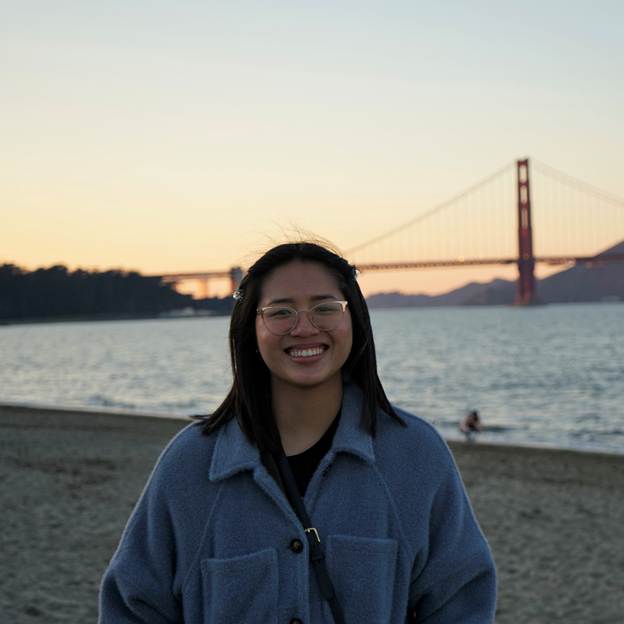
Celine Lu
4th year Clinical Psychology Graduate Student
Mentored by Dr. Shannon Dorsey
Let's start with the basics, where are you from and where did you complete undergrad/masters?
I went to UCLA. Go Bruins!
How did you wind up at UW/why did you apply here? What do you think about living in Seattle?
I applied to UW because I loved the work that my advisor, Shannon Dorsey, does and because of UW being a hub for implementation science research. After visiting, I fell in love with the city with its mountains and plenty of parks -- I knew that UW and Seattle would be a great fit for me.
What is your research interest and how did you get into it (what inspires/motivates you)?
I am interested in the implementation of evidence-based mental health treatments in community mental health settings. I am also interested involving policymakers and other system leaders in research in some capacity.
How did you learn about your funding opportunity and tell us about the application/waiting process?
A lot of students in my lab have previously applied and were awarded NRSAs, so it seemed like almost an expectation that I would apply for it. I also decided to apply because I am interested in research as a career, so being awarded the NRSA would make me competitive for future NIH-funded awards as well. My application process took a very long time...I finally was awarded it about 2 years after I first applied — but hey! Better late than never.
How did you feel when you learned that your application was accepted and that you will receive funding?
I was in disbelief until the moment the funds were actually released. I'm still experiencing a mix of emotions — gratitude, excitement, anxiety about the project — but I know it will all work itself out in the end.
What is the name of your project and the funding source?
Integrating multi-level partner perspectives to improve progress monitoring implementation in youth community mental health. Predoctoral Individual National Research Service Award (F31) through the National Institute of Mental Health.
How might your research change the world?
I hope that my research can provide insight into how to involve system-level leaders in research to close the research-practice-policy gap.
Do you have any advice/tips/suggestions for others who may apply to this opportunity? About graduate study in general?
Ask around for examples and tips. Meet with the program officer at the NIH in advance to run your idea by them. Think about what you want training in and frame your project around that since it is a training grant first and foremost.
What do you hope to accomplish with the funding and/or while in the UW Psychology graduate program?
I hope to complete my proposed project and have more time dedicated to writing papers.
What do you like doing in your spare time?
I restarted pottery this past year and have been loving it. I love making pieces and gifting them to friends and seeing their reactions.
The last book and/or movie you saw and enjoyed?
Currently reading "The House in the Cerulean Sea" by TJ Klune and am loving it so far. I also love horror movies and just watched "Obsession" - it was fantastic!
What do you plan to do once you complete your PhD?
I'll most likely get a post-doc, or some other research oriented position. I'm keeping my options open!
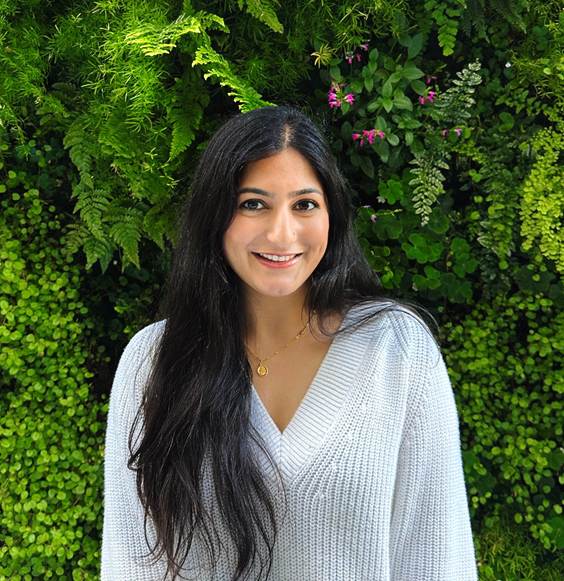
Priya Dahiya
3rd year Clinical Psychology Graduate Student
Mentored by Dr. Shannon Dorsey
Let's start with the basics, where are you from and where did you complete undergrad/masters?
I’m originally from San Francisco, and I completed my undergrad at UCLA in psychology and global health.
How did you wind up at UW/why did you apply here? What do you think about living in Seattle?
I felt like the clinical psych program at UW had a great balance of diverse clinical training opportunities and strong research mentorship, and I primarily applied to work with my advisor, Dr. Shannon Dorsey! Her lab was a great fit for my interests in implementation science across both domestic and global settings, and I am so glad I joined her lab. The PNW is such a breath of fresh air! The beautiful mountains and summer sunsets make up for the rainy season.
What is your research interest and how did you get into it (what inspires/motivates you)?
I am interested in improving access to evidence-based, quality mental health care for children and adolescents from vulnerable populations, with an emphasis on treatment following traumatic exposure. My research interests began in college after working in domestic violence settings and seeing how systemic barriers impact access to care.
How did you learn about your funding opportunity and tell us about the application/waiting process?
I learned about the NRSA from my advisor and senior lab mates who were funded on this award when I started the program. Definitely a long process with tons of revisions, but I am very grateful for my mentors and peers who provided support and waited with me!
How did you feel when you learned that your application was accepted and that you will receive funding?
I was so surprised! NIH funding has undergone several changes over the past year that has greatly impacted so much important research. Receiving funding in this climate feels especially significant, and I am grateful for the opportunity to further my training and add to implementation science research.
What is the name of your project and the funding source?
Expanding Access to Mental Health Services for Maltreated Youth in Child Advocacy Centers: Implementation Determinants and Strategies to Improve Screening and Referral. Predoctoral Ruth L. Kirschstein National Research Service Award (F31) through the National Institute of Mental Health.
National Research Service Award, National Institute of Mental Health
How might your research change the world?
Over 380,000 survivors of child abuse are served by Child Advocacy Centers but few receive evidence-based mental health assessments. This potential under-detection of mental health needs and referral to services poses a significant public health concern, considering that child maltreatment (without mental health intervention) is one of the largest risk factors for developing psychiatric and mood disorders. My research aims to explore the barriers and facilitators impacting the consistent use of evidence-based screening tools and timely mental health referral in these settings, and in the long-term, hopefully ensure that survivors with mental health needs are identified and have access to quality mental health care.
Do you have any advice/tips/suggestions for others who may apply to this opportunity? About graduate study in general?
Other students in the program are your greatest resource! It was so helpful working with students who have applied for this grant in the past and reading their applications as a starting point. My advice for grad school is to be a sponge and take it in; there are many learning opportunities that will help shape you into the researcher and clinician you want to become.
What do you hope to accomplish with the funding and/or while in the UW Psychology graduate program?
I hope to develop relationships with community partners and use a qualitative approach to better understand implementation determinants of mental health screening and referral practices.
What do you like doing in your spare time?
I love to run, do yoga, and explore all the coffee and matcha places in Seattle with my friends!
The last book and/or movie you saw and enjoyed?
The Many Lives of Mama Love by Lara Love Hardin
What do you plan to do once you complete your PhD?
Hopefully a post-doc and then a clinical faculty position where I can work in implementation science research while also continuing clinical practice.
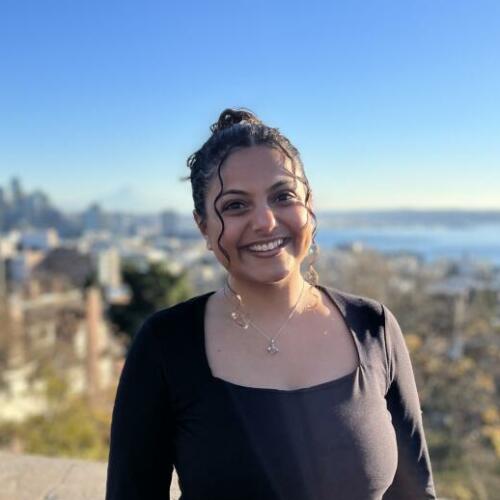
Urmi Pandya
3rd year Clinical Psychology Graduate Student
Mentored by Dr. Mary Larimer
Let's start with the basics, where are you from and where did you complete undergrad/masters?
I am from Richmond, VA and went to Duke for undergrad and did a postbac at the NIMH.
How did you wind up at UW/why did you apply here? What do you think about living in Seattle?
I ended up applying to UW because of the strong parenting and substance use research focus, the amazing clinical opportunities (particularly DBT), and the chance to live in a completely different and exciting part of the country for some of my life. While Seattle is far from home, I have absolutely loved all that the PNW offers, and it has changed me as a person for the better.
What is your research interest and how did you get into it (what inspires/motivates you)?
While I do a lot of things, much of my work focuses on parenting and substance use in a digital context and how we can leverage technology to better understand and develop interventions for psychopathology.
How did you learn about your funding opportunity and tell us about the application/waiting process?
I learned about the NRSA F31 first through other students in the program and then got more details about how it works from my advisor, Mary. I applied in August 2025 and got the award in June 2026.
How did you feel when you learned that your application was accepted and that you will receive funding?
I was so excited and surprised to receive funding, especially in such a difficult funding climate right now. I am so grateful for all the folks who supported me throughout this long journey filled with a lot of uncertainty - Mary, Kate, other faculty and labmates in CSHRB, other students in the clinical program, my undergrad and postbac mentors, and of course my family and friends in general.
What is the name of your project and the funding source?
My project is titled, "Digital Communication Between Parents and College Students: A Mixed Methods Investigation of Alcohol Use and Daily-Level Associations" and is funded by the NIAAA.
How might your research change the world?
That's a tough question because sometimes as a student it feels like all the work I am doing is so minor compared to everything else that is happening, but I would like to think that this work will help us better understand how communication between parents and their kids actually looks like now in the digital age since so much is constantly changing in modern society.
Do you have any advice/tips/suggestions for others who may apply to this opportunity? About graduate study in general?
I was really thankful for all the previous examples I had and all that I learned from other students who had gone through the process.
What do you hope to accomplish with the funding and/or while in the UW Psychology graduate program?
This award will give me some protected time to work on the dissertation project that I proposed and let me deepen my training in various methods that I am excited about.
What do you like doing in your spare time?
I love yoga, climbing, hiking, paddleboarding, crocheting, reading, and exploring places with friends!
The last book and/or movie you saw and enjoyed?
Currently reading The Thursday Murder Club and love it so far.
What do you plan to do once you complete your PhD?
I am not sure yet but ideally something that involves both research and clinical work/training/supervision.